
November 4, 2026 — Phase II of the Kaipeng Mining (KPM) renewable power system in the Democratic Republic of the Congo (DRC) has completed one month of successful operation.NR was responsible for overall system planning, design and the supply of core equipment.
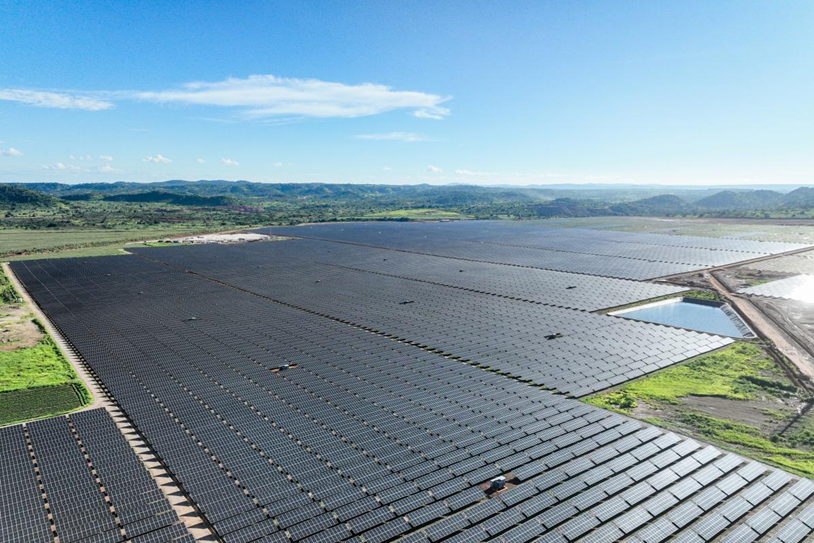
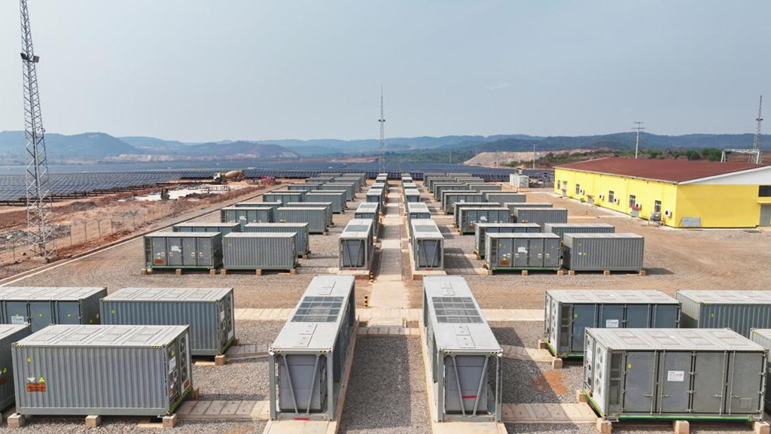
The project is a 100% renewable energy system operating at a maximum AC voltage of 120 kV. It consists of three geographically distributed grid-forming energy storage stations (combined 300 MW / 900 MWh) and 440 MWp of solar PV. The system supports seamless transitions between grid-connected and islanded modes, as well as stable long-term islanded operation.
Exhibiting the characteristics of a complex, large-scale power grid, it is the largest commissioned mine-dedicated renewable power system in the world by capacity, with the highest number of nodes and the most complex operating conditions. Since commissioning, the system has remained in stable islanded operation throughout, markedly improving both the security of power supply at the mine and the utilization of renewable energy — a landmark breakthrough for NR in large-scale overseas renewable power systems for mining.
Building on Phase I Success
Phase II builds on the KPM Phase I project. As the first large-scale renewable power system built for mining operations in the DRC, Phase I was delivered efficiently on the strength of NR's integrated solution. After in service, it eliminated long-standing problems of unreliable supply to critical loads and poor power quality. This fully validated the solution, quickly earned the customer's confidence, and prompted the immediate launch of Phase II — which has further extended the coverage of secure green power across the mine site.
Overcoming the Challenges of Multi-Point Grid-Forming
In a multi-point grid-forming renewable power system, individual grid-forming nodes support one another, making the system more resilient to disturbances. The same architecture, however, brings a distinctive set of challenges: complex dynamic interactions among multiple voltage sources, the difficulty of achieving natural synchronization during transients, and the difficulty of engineering defenses against complex faults.
On KPM Phase II, NR-ISGrid grid-forming technology completed comprehensive engineering validation. It enabled the coordinated, stable operation of multiple grid-forming storage stations across all operating conditions and established a highly reliable, 100% renewable grid dynamically supported by multiple grid-forming sources.
The project also introduced an innovative “unit–station–cluster” coordinated control architecture, built on three tiers — unit-level response, station-level autonomy, and cluster-level coordination. This architecture allows flexible switching among more than 1,000 operating configurations and significantly improves the stability, flexibility, and scalability of this complex system.
Engineering Validation and Global Reach
The successful commissioning of Phase II further demonstrates the reliability and adaptability of NR's integrated renewable power system solution. Centered on NR-ISGrid grid-forming technology and combining the theory of three lines of defense for fast coordinateing control with multi-timescale optimal dispatch, the solution has proven effectively in large-scale, complex renewable power system applications.
It also confirms, in engineering terms, that an integrated solution built on ideal synchronous power source grid-forming technology is capable of underpinning complex, large-scale grids. To date, this solution has been deployed in more than 50 projects across over 20 countries, delivering stable, reliable green power to off-grid and weak-grid applications such as overseas mines and remote communities.
Looking ahead, NR will remain guided by its belief that "solving problems is innovation," continuing to advance grid-forming technology and system-level solutions, helping to build energy supply systems that are secure, cost-effective and green, and contributing proven technology and expertise to the global transition toward low-carbon energy.